



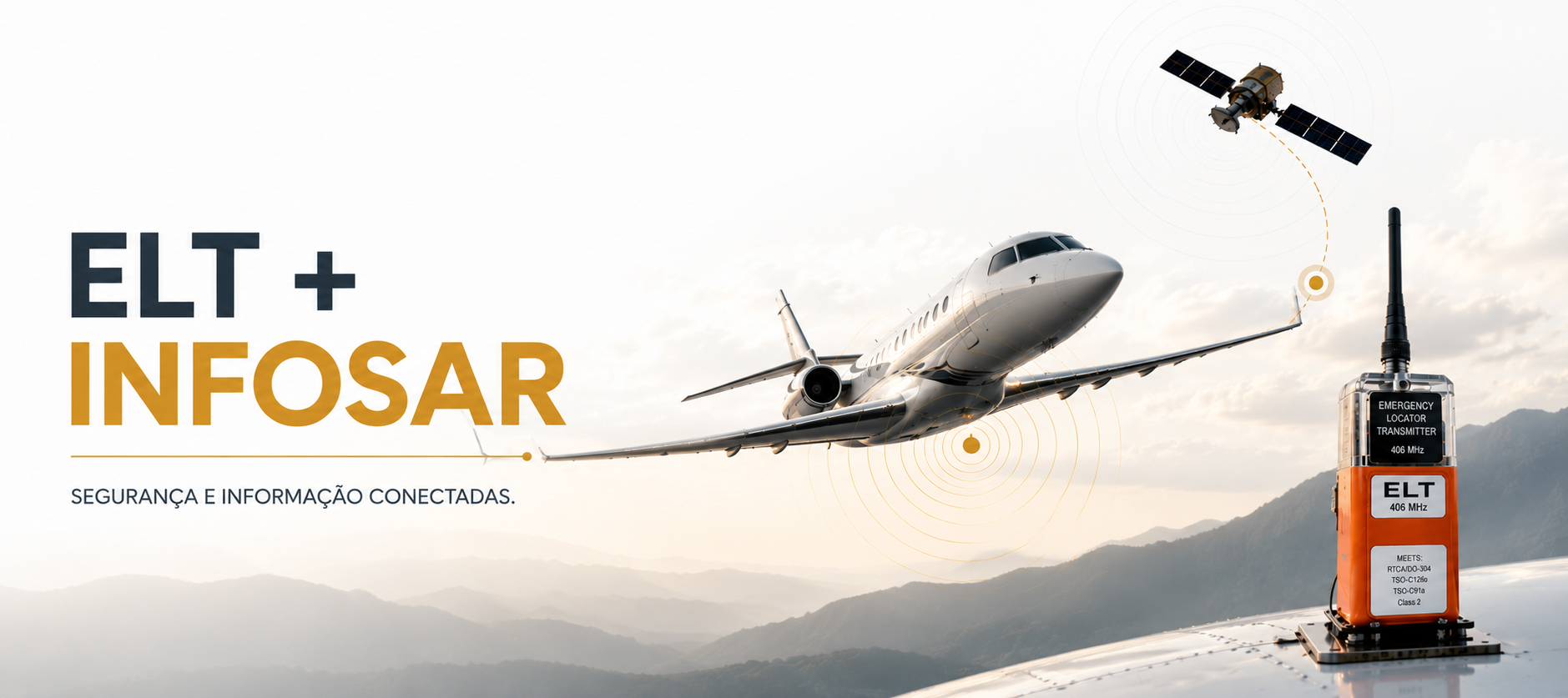
In an aviation emergency, every minute counts. Understand how proper registration of the ELT beacon in INFOSAR assists Search and Rescue teams in identifying an aircraft and making emergency responses significantly more efficient.
When an aircraft encounters an emergency situation, quickly locating its position and identifying who is involved can make a critical difference in search and rescue operations. It is within this context that the ELT (Emergency Locator Transmitter) and INFOSAR—the system used to register emergency beacons—play a pivotal role.
Although it may seem like just another administrative requirement, maintaining properly registered and updated beacon data directly helps link an emergency signal to a specific aircraft, turning raw data into actionable information for Search and Rescue (SAR) teams.
What is an ELT?
An ELT is an emergency distress beacon installed on aircraft, designed to transmit a distress signal under specific emergency conditions. On equipment operating on 406 MHz, this signal can be detected by the international satellite-aided search and rescue system, allowing an alert to be forwarded immediately to the appropriate authorities.
However, receiving a signal is only part of the process. For teams to quickly identify which aircraft sent the signal and obtain vital operational details, it is fundamental that the data linked to the beacon is correctly registered.
What is INFOSAR?
INFOSAR is the system provided by the Department of Air Space Control (DECEA) for registering 406 MHz emergency beacons. Beyond aviation ELTs, the system also manages other types of distress beacons, such as those used on maritime vessels and Personal Locator Beacons (PLBs).
In aviation, registration links the beacon's unique identification code to essential information regarding the aircraft, operator, and emergency contacts. This data can be decisive when an alert needs to be investigated.
In aviation, prevention also means ensuring that when an emergency happens, the right information is available to the right people in the shortest possible time.
From Emergency Signal to Search and Rescue Operations
Imagine an ELT distress signal is detected. The alert signals a potential emergency, but response teams must still answer critical questions: Which aircraft is involved? Who is the operator? Was it actively flying at that time? What was its route? Who can provide details about the flight?
This is precisely where an up-to-date registration becomes vital. Based on the beacon's identification, Search and Rescue teams can match the incoming signal to registered data and contact the designated emergency personnel immediately.
These emergency contacts can supply critical details to help assess the situation, such as flight plans, number of persons on board, last known position, and other key operational factors. The more reliable this information is, the lower the uncertainty during the initial assessment of an alert.
Outdated Data Can Hinder the Response
It is not enough to simply complete the registration once and forget about it. Ownership or operator changes, ELT replacements, updated phone numbers, new emails, or any changes to the aircraft's profile must be reflected in the database.
Otherwise, during a real emergency, response teams may face severe delays in reaching individuals who can provide key details about the aircraft. Therefore, maintaining updated records should be a routine part of aircraft ownership and management.
Key information that requires ongoing attention includes:
- Aircraft tail number (registration mark) and specifications;
- ELT manufacturer, model, and serial number;
- Programmed beacon identification code;
- Owner and operator contact details;
- Phone numbers and emails for emergency contacts;
- Updated photos of the aircraft;
- Expiration dates and registration status in INFOSAR.
Having multiple emergency contacts registered is also essential, reducing reliance on a single individual during crucial verification steps.
Registration vs. ELT Maintenance: Understanding the Difference
An important distinction is not to confuse the administrative registration of the beacon with its technical condition. Registering on INFOSAR links the transmitted signal to the data necessary for emergency response and identification.
On the other hand, aspects such as physical installation, inspections, operational tests, overall equipment condition, and battery replacement fall under aircraft maintenance procedures and must strictly follow applicable technical requirements and guidelines.
Both measures complement each other. A technical ELT in proper working order must be correctly registered, while an updated registration cannot replace the necessity of keeping the physical unit airworthy and operational.
What About Aircraft Inspections?
During routine maintenance activities and documentation reviews, it is essential to verify consistency between the installed equipment and official registry records. The ELT identification, technical data, and aircraft association must be completely aligned.
Registration and updates are the direct responsibility of the aircraft owner or operator, while installation, condition, and physical maintenance must be handled by certified professionals and organizations according to applicable aviation regulations. This clear separation ensures administrative requirements are not confused with technical interventions.
A Small Routine Task That Makes a Major Difference
Operational safety does not rely on a single action. It is the result of multiple safety layers working together: proper maintenance, flight planning, updated documentation, crew training, procedures, and emergency equipment.
Maintaining an accurate ELT registration in INFOSAR is a vital link in this safety chain. Under normal conditions, updating a phone number or checking beacon records may seem like just administrative paperwork. However, in an emergency, this exact information enables rescue teams to comprehend the situation rapidly and deploy Search and Rescue resources effectively.
For this reason, aircraft owners and operators should keep their ELT registration updated and make this verification a standard part of their periodic maintenance routines. In aviation, safety means ensuring that when emergency strikes, the right information reaches the right hands without delay.
Editorial References & Sources:
- Department of Air Space Control (DECEA) — INFOSAR and distress beacon registration guidelines.
- Brazilian Mission Control Center COSPAS-SARSAT (BRMCC/FAB) — Distress beacon registration and operation information.
- INFOSAR System — Official platform for emergency beacon registration and management.